Blender 5.1 Just Released: Complete Guide to All New Features
The wait is over for the open-source 3D community. As of March 17, 2026, the Blender Foundation has officially released Blender 5.1. Following a brief beta period that began in February, this latest version is now available as a stable build for Windows, macOS, and Linux.
While Blender 5.0 was a landmark release, version 5.1 focuses on refining the user experience with significant performance boosts, powerful new nodes, and a massive wave of bug fixes. Dubbed an “iterative update” by industry observers, it is nonetheless a typically wide-ranging enhancement that touches nearly every corner of the software.
Here is everything you need to know about what’s new in Blender 5.1.
1. The Star of the Show: New Raycast Node
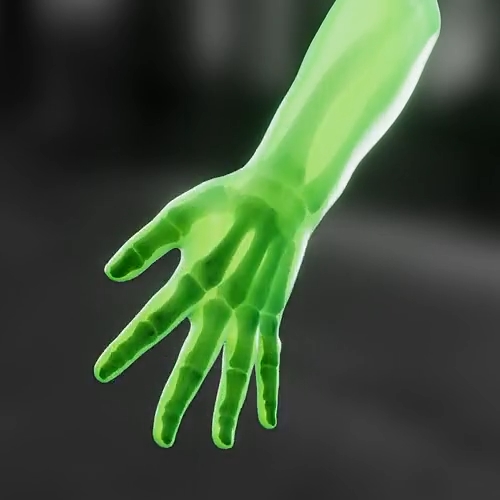
If there is one feature that defines Blender 5.1, it is the introduction of the Raycast Shader Node, available for both Eevee and Cycles.
This general-purpose node traces the path of a light ray within a scene and reports information from the first surface it hits, such as distance and surface properties. While that sounds technical, its creative applications are massive. Artists are already using it to create:
Decal Projection: Easily project textures onto surfaces without complex UV mapping.
Non-Photorealistic Rendering (NPR): Create dynamic toon shading and X-ray-like render effects.
Distance-Based Effects: Generate masks and effects based on how far an object is from the camera or another surface.
However, the developers note that the Raycast node can be computationally expensive, so baking the output is recommended for final renders to save time.
2. Rendering Gets Faster: Cycles & Eevee Performance Boosts
Blender 5.1 brings substantial speed improvements under the hood, meaning faster viewport navigation and quicker render times.
Eevee (Real-Time Renderer): Shader compilation is now significantly faster. In the standard “Barbershop” benchmark scene, users can expect a 25-50% speed increase when compiling shaders for the first time. Furthermore, Eevee now saves 30-40% texture memory by intelligently overlapping framebuffers.
Cycles (Production Renderer): Both CPU and GPU rendering get a lift. CPU rendering is 5-20% faster on Windows, while GPU rendering sees a 5-10% speedup across various hardware. A major highlight is that AMD hardware ray tracing (HIP-RT) is now enabled by default, dramatically improving ray tracing performance on compatible AMD GPUs.
Vulkan by Default: Moving away from legacy OpenGL, Blender 5.1 now enables Vulkan by default. This modern graphics API provides better driver efficiency and improved performance across supported hardware.
3. Animation: Faster Evaluation for Complex Rigs
Character rigs and complex animations feel snappier in Blender 5.1 thanks to optimizations in the animation system.
Faster Armature Evaluation: On modern multi-core CPUs, evaluating a 2,600-bone armature is over 2x faster.
Shape Key Performance: Morph targets (Shape Keys) now evaluate 2.3x to 4.0x faster on dense meshes.
Gaussian Smoothing Modifier: A new non-destructive modifier has been added to the Graph Editor. It allows animators to smooth out F-curves easily—perfect for cleaning up noisy motion capture data.
4. Compositor Upgrades: Mask to SDF and Speed
Blender’s internal compositor continues to close the gap with dedicated software. Version 5.1 introduces the new Mask to SDF Node.
SDF stands for “Signed Distance Field.” This node converts a 2D mask into an SDF, calculating the distance of each pixel from the mask’s edge. This opens the door for high-quality edge glows, procedural blurs, erosion, and dilation effects directly within the compositor.
Additionally, several key compositor nodes (including Blur, Glare, and Lens Distortion) are now 1.2x to 2x faster.
5. The “Winter of Quality”: Over 350 Bug Fixes
Stability was a major goal for this release. Following the “Winter of Quality” development drive, the Blender team has fixed over 350 reported bugs.
Modeling: Received the most attention with 58 bug fixes.
Video Sequencer & UI: Came in a close second with 53 and 50 fixes respectively.
VFX Tools: The Compositor and Sequencer also underwent major code refactors to improve long-term reliability.
6. Under the Hood: VFX Platform & Python 3.13
For developers and pipeline technicians, Blender 5.1 updates its core libraries to match the VFX Reference Platform 2026. Key updates include:
Python 3.13
OpenColorIO 2.5
OpenEXR 3.4
OpenVDB 13.0
Looking Ahead
With Blender 5.1 now out the door, the development focus shifts to Blender 5.2 (LTS) , scheduled for July 2026, and Blender 5.3 in November 2026. Future updates are expected to bring layered textures, animation layers, and a Cycles texture cache.
For daily drivers, Blender 5.1 offers a compelling mix of creativity (Raycast node) and practicality (speed boosts and bug fixes). It is a solid update that reinforces Blender’s position as a leader in 3D creation.
More information is here: What’s New in Blender 5.1
Blender 5.1 release notes: Here